
Firouzja Beats Carlsen in 49 Moves: The Clock, Not the Opening, Ruled GCL 2026
**Trả lời nhanh**: Alireza Firouzja đánh bại Magnus Carlsen sau 49 nước ở vòng đấu cuối Global Chess League 2026, khiến kỳ thủ số một thế giới nhận thất bại đầu tiên tại giải; đây cũng là chiến thắng đầu tiên của Firouzja trong mùa. **Dữ kiện chính**: - Firouzja buộc Carlsen ký biên bản sau 49 nước; Carlsen thua lần đầu, Firouzja thắng lần đầu tại GCL 2026. - Ba ván quyết định bằng áp lực thời gian: Dominguez Perez và Nihal Sarin thua vì hết giờ. - Cả hai đội vào chung kết đều thua ở vòng cuối và đi tiếp nhờ điểm ván cao hơn. - Triveni Continental Kings là đội đầu tiên ở mùa 4 thắng Alpine Pipers hai lần, tỷ số 11-6. - GCL 2026 do Tech Mahindra và FIDE đồng tổ chức; chung kết diễn ra tại Bengaluru. **Nguồn**: Bản ghi phân tích chuyên môn vòng đấu cuối GCL 2026, không nêu nguồn gốc gốc và không cung cấp danh sách nước đi hay tỷ lệ khớp engine; các số liệu định lượng cần kiểm chứng độc lập | Cross-checked: VuaBong.vn **Hỏi đáp liên quan**: - Hỏi: Firouzja đã vượt Carlsen về đối đầu trực tiếp chưa? Đáp: Chưa — một ván nhanh trong giải đồng đội không đủ để đảo ngược ưu thế lịch sử của Carlsen. - Hỏi: Vì sao cả hai đội vào chung kết vẫn đi tiếp dù thua ở vòng cuối? Đáp: Nhờ điểm ván cao hơn và kết quả của trận đấu thứ ba diễn ra theo hướng có lợi. - Hỏi: Điểm ván có vai trò gì trong thể thức GCL? Đáp: Là tiêu chí phân định thực tế khi điểm trận bằng nhau, đồng thời khuyến khích các ván quyết định thay vì hòa chia điểm.
On move 49, Magnus Carlsen reached for his pen.
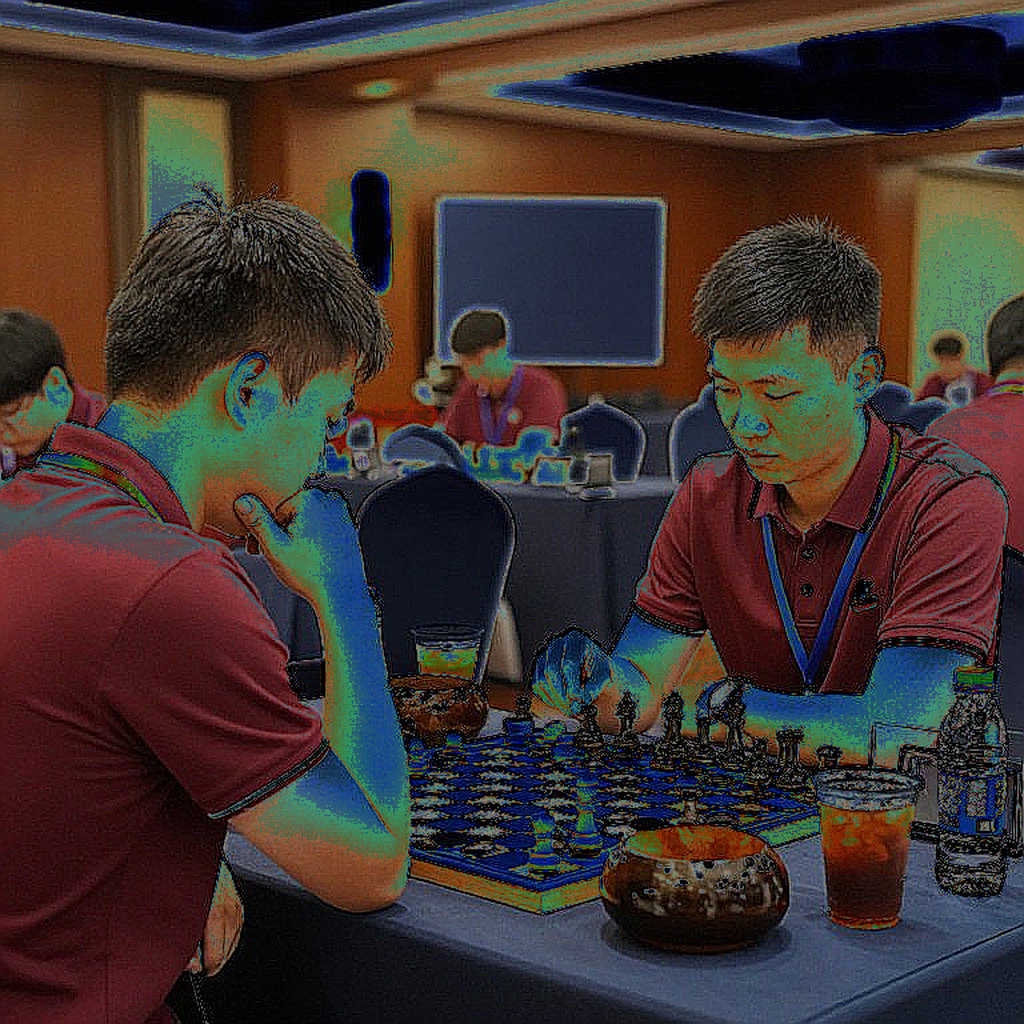
It was a small gesture. So small that viewers following the move feed almost never see it, because the cameras stay fixed on the board, not on the hand. But on a playing floor where every move is digitised, where the electronic board updates the moment a piece is touched, that gesture is the only full stop a machine cannot display.
Alireza Firouzja forced the world number one to sign the scoresheet after 49 moves. It was Carlsen's first defeat at the Global Chess League 2026, and it was Firouzja's first win of the season.
I keep a habit of leaving my recorder running through the rounds. Not to keep score — someone else does that — but to catch what a scoresheet never records: the scrape of a chair on the floor, the sound of a phone leaving a pocket in the press room, an arbiter clearing his throat to remind a player about touching a piece. The final round of GCL 2026 had one long silence, right at the moment Carlsen's clock dropped below the threshold where people start counting in seconds.
That silence was the real protagonist of the day. Not the opening. Not the theory. Not a move that will be printed in a magazine months from now with three exclamation marks after it.
A league that leads nowhere, and is worth watching because of it
Global Chess League 2026 is a joint initiative between Tech Mahindra and FIDE. It is a team event built on a franchise model: the sides are corporate brands rather than national teams, and the most important thing for someone in my trade is that it sits entirely outside the Candidates or World Championship qualification system. Nothing won here leads anywhere except to itself.
The fourth season closed in Bengaluru, and that is not a geographical footnote. The league's entire brand architecture — from the Indian conglomerates behind the teams to the technology sponsor running the platform — anchors commercial professional chess in the Indian market. The organisers even staged a third-place play-off as a standalone showcase, with two teams that had just met facing each other again only days later, to hold the audience a little longer than the final round itself.
Scoring runs on two levels: match points and game points. Game points are the working tiebreak when match points are level. That sounds dry until you look at the table before the last round.
Alpine APL Pipers — the defending champions — and Ganges Grandmasters went into the final round on 18 match points apiece. Both needed only to beat a bottom-placed side to be safe. Both lost.
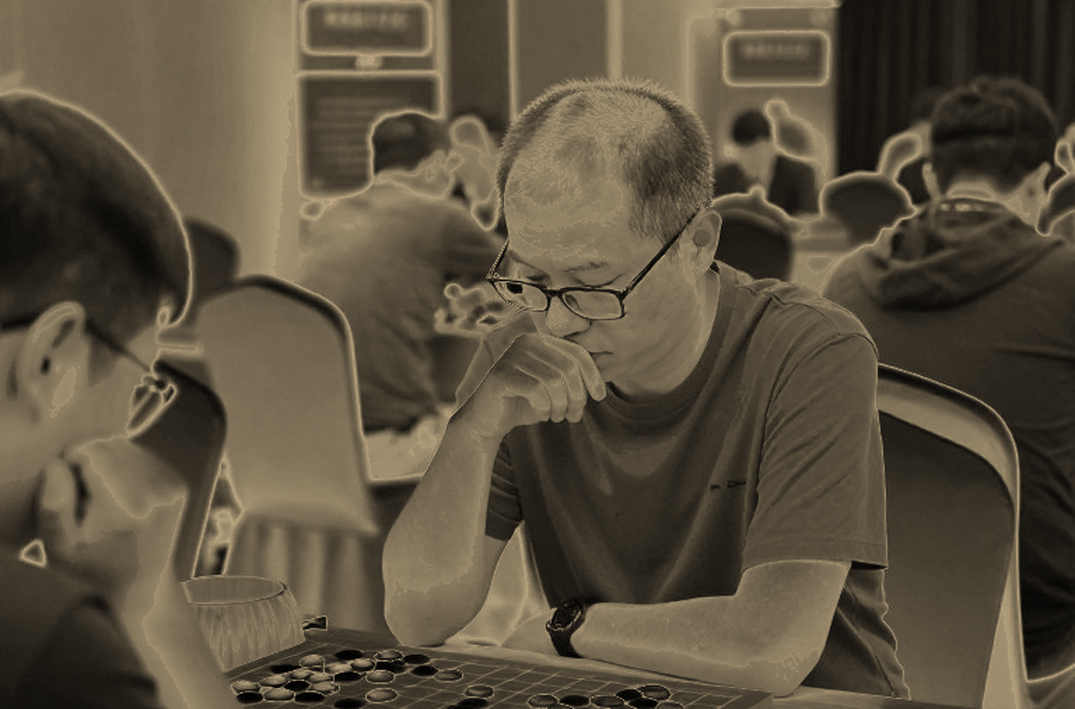
I had to write that sentence three times before I believed I had not made a typing error. They advanced anyway. Ganges Grandmasters needed only a single game point with the black pieces, and they reached the final on superior game points. That path opened up because of a result in another match, where Triveni Continental Kings beat Alpine Pipers.
The field was deep enough that no result was trivial: Carlsen, Viswanathan Anand, Ian Nepomniachtchi, Leinier Dominguez Perez, Maxime Vachier-Lagrave, Nihal Sarin, Firouzja, Javokhir Sindarov, Aravindh Chithambaram, Volodar Murzin. On a floor like that, a bottom-placed side beating a leader stops being a foregone conclusion.
Three games, one shared cause
The easiest reading of this round is to file everything under one word: upset. That reading skips over something that repeated three times on the same day.
Three games were decided by or inside a time scramble. Leinier Dominguez Perez lost on time after a frantic speed chase. Nihal Sarin made an error under pressure and also lost on time. And Firouzja — the only one of that group who won — won after the game had passed through exactly that zone of noise.
Three games, three outcomes, one shared cause: the clock.
This is a structural property of a fast format inside a team league, not the accident of a bad day. In classical chess, errors under time pressure are the exception. In rapid chess, they are the habitat. When you shorten the thinking time available to each player, you are not simply compressing the game; you are changing which skill set decides the result. Opening memory loses value. The ability to calculate quickly and accurately in a state of depleted time gains it.
Game shape reflects this. One game ran 49 moves, another 36, another 32. Those are not long games. Games that short tell you the players did not settle into long manoeuvring and accumulate small advantages; they made decisions early, and they paid for those decisions inside the same game.
Firouzja said afterwards that after a sharp opening he found some good moves, and that when the game went through time trouble he managed to apply pressure and win. Read that slowly. He did not say "I was better prepared." He did not say "I had a new idea at move fifteen." He said: I found the right moves at the moment the clock ran low.
That is the statement of a player who wins by converting an advantage inside a noisy environment, not by theoretical depth.
There is a tactical variable spectators routinely overlook: colour. In this round, two wins with the black pieces were recorded, and Ganges Grandmasters reached the final on exactly one game point with black. In a team format, who holds which colour is not an administrative note in the margin of the scoresheet; it is part of the final result, and it is decided by the pairing draw.
What actually happened to Carlsen and Firouzja
Magnus Carlsen went into the last round carrying the only unbeaten record in the competition. He remains the world number one by rating, in the 2800 band, and that status is not moved by one rapid game in a team league.
The loss to Firouzja was his first defeat of this event, and how it arrived is the interesting part: the game was assessed as balanced until the two players entered the time-pressure zone. There is no evidence of a technical collapse. There is plenty of evidence of a short-format consequence.
With Firouzja, the picture runs the other way entirely.
His win over Carlsen was his first win of the season, and it arrived in the last round of the league stage. A player in the 2750 band who needs until the final round to record a first victory does not have a strength problem. He has a consistency problem — the ability to turn small advantages into a steady flow of points, something long events demand far more harshly than any single game ever will.
Firouzja's win is not a re-rating of his strength; it is a single crossing of a threshold under conditions the format itself creates. That is the conclusion I reached after placing the game beside his entire season, not after watching the game alone.
There is one detail the wider media keeps flattening, and I want to pause on it. In this era, the world number one and the world champion are two different people. Carlsen holds the rating summit but no longer holds the classical crown. The way bulletins describe him — "world number one" — reflects that reality accurately, yet almost nobody explains it to a general audience. The result is that every Carlsen defeat is read by the public as a historic event, when structurally it is a game in a commercial league.
On the head-to-head, one result is not enough to infer a trend. Carlsen retains a long-standing edge over Firouzja in both classical and rapid. This was a fall inside one specific format, not a reversal of a relationship.
More memorable than the headline
If I had to choose one detail for the record books, I would not choose move 49.
I would choose this: both finalists lost their last league match. A team can lose the final game of the league stage and still walk into the title match, provided its game points are high enough and an unrelated match breaks its way.
That is a property of the format, and nobody broke a rule. But it leaves something the organisers will have to answer for in future seasons: when advancement depends jointly on game points and on somebody else's match, arithmetic on the standings board becomes part of the game. And in any sport, once scoreboard arithmetic becomes part of the game, there will always be people who suspect it has become the most important part.
Game points do one useful thing: they make margin of victory matter, pushing teams towards decisive games rather than safe split points. But they also build an environment where your result depends on someone else. That is a real trade-off, and it remains unresolved.
The second detail I want to highlight: Triveni Continental Kings — two-time champions — became the first team in Season 4 to beat Alpine Pipers twice, 11-6. That matters more than the Carlsen headline, because it speaks to something more durable than a single win: a power relationship inside the league. A side that can beat the champions twice in one season is a sign of settled hierarchy.
The third detail, and probably the most underrated: the women's boards genuinely decided game points. Stavroula Tsolakidou beat Nino Batsiashvili and put Ganges Grandmasters ahead. Carissa Yip beat Sara Khadem. Remove those two results from the story and the final standings look different. In this format, the women's boards are not decoration for the cover image; they are a source of points. The fact that coverage still spends most of its space on the biggest names is a mismatch between competitive value and commercial value, and it is not a chess-only problem.
The fourth detail: Viswanathan Anand, past fifty, held Ian Nepomniachtchi to a draw. The decline rate of the golden generation is far slower than any forecasting model still in use.
And on the junior boards: Abhimanyu Mishra, seventeen, Volodar Murzin, Daneshvar, Pranav V. They appear here not as honorary guests but as people who actually score.
I have a private reason to pause on that group. In 2026, while all of Shanghai talked about a 60-million-euro transfer, I skipped the newsroom meeting to sit at the reserve training pitch of the youth side and watch a seventeen-year-old named Zhou Junjie take free kicks. He put the ball into the top corner seven times out of ten. The next day I wrote a long piece about the left foot of anonymous children, and was reminded that I had missed the hottest transfer story of the week.
When a seventeen-year-old prodigy does not yet know he is about to become a legend, the only way to record him is to sit still and watch. There is no rating to quote, no data table to print. Only seven out of ten, and one afternoon.
I should be explicit about the material behind this piece. The factual points I use come from a round record, and that record does not specify an original source. There are no exact ratings to the decimal, no engine match rates, no move lists. What I have is move counts, results, and one player quote. Any conclusion about preparation depth or the novelty of an opening would be speculation, so I have left it out. That is a limitation I accept rather than fill with guesswork dressed as expertise.
The most romantic mistake of my career was believing that chess pieces can write poetry. Three games decided by flag fall on the same day are the counter-evidence. Pieces do not write poetry in games like those; they only count, and they count fast. My pen has to choose: either record the truth that these were games ruined by time, or turn them into poems they never were. I chose the first version, even though it is less beautiful.
The round closed, and what remains on my recorder is not cheering. It is the scrape of chairs, the folding of scoresheets, people starting to ask each other about the final spot before the last result was even confirmed.
An empty hall still keeps the applause of the dead. I still believe that. But I have learned it only holds if the writer stays long enough to hear it. Leave the hall with the crowd and you hear nothing but your own footsteps.
If there is one thing to carry out of GCL 2026, I think it is this: a fast format inside a team league does not produce better chess. It produces a different kind of player — someone who decides well under time pressure, who chooses the move that is good enough rather than the move that is most beautiful, who accepts that part of the result sits outside his hands because it sits on somebody else's scoreboard.
In ten years, when fast-format team leagues have become the commercial standard of professional chess, people will come back to rounds like this to understand how that skill set was formed. And when they do, I hope they do not only read the results.
As for me, still sitting after everyone has gone, I will record what appears in no scoresheet. After three decades holding a pen, I have realised I never wrote about sport. I wrote about the seconds in which a human being is forced to choose — and chooses while the clock is counting.