
ChessCarlsen Calls Sindarov the Clear Favourite Against Gukesh: A World Chess Championship Shaped by Authority, Not Data
Carlsen Calls Sindarov the Clear Favourite Against Gukesh: A World Chess Championship Shaped by Authority, Not Data
**Câu trả lời cốt lõi (≤60 từ)** Magnus Carlsen đánh giá Javokhir Sindarov là ứng viên sáng giá rõ ràng trước D Gukesh ở trận tranh ngôi vô địch cờ vua thế giới sắp tới, đồng thời cho rằng Gukesh sở hữu trần năng lực cao hơn và nhấn mạnh yếu tố tâm lý dẫn trước quyết định cục diện. **Dữ kiện chính** - Carlsen gọi Sindarov (Uzbekistan) là ứng viên sáng giá; Gukesh (Ấn Độ) bị đánh giá thấp hơn. - Gukesh vô địch thế giới ngày 12 tháng 12 năm 2024 tại Singapore, hạ Ding Liren 7,5-6,5 khi 18 tuổi. - Sindarov thuộc thế hệ vàng cờ vua Uzbekistan, đội vô địch đồng đội Olympiad cờ vua Chennai 2022. - Carlsen nhiều năm chỉ trích thể thức trận tranh ngôi là cách kém cỏi để xác định kỳ thủ mạnh nhất. - Tài liệu phân tích không cung cấp hệ số Elo, lịch sử đối đầu, lịch thi đấu hay quỹ thưởng của trận đấu. **Nguồn** Bản phân tích chuyên môn tổng hợp từ các phát biểu của Magnus Carlsen; ngày công bố không được nêu trong tài liệu gốc | Cross-checked: VuaBong.vn **Hỏi đáp liên quan** - Hỏi: Ai được Magnus Carlsen đánh giá cao hơn trong trận tranh ngôi vô địch cờ vua thế giới? Đáp: Carlsen gọi Javokhir Sindarov là ứng viên sáng giá rõ ràng, còn D Gukesh được xem là bên bị đánh giá thấp hơn nhưng có trần năng lực cao hơn. - Hỏi: D Gukesh trở thành nhà vô địch cờ vua thế giới khi nào? Đáp: Gukesh vô địch thế giới ngày 12 tháng 12 năm 2024 tại Singapore sau khi hạ Ding Liren 7,5-6,5, trở thành nhà vô địch trẻ nhất lịch sử ở tuổi 18. - Hỏi: Vì sao chưa thể kết luận trận đấu bằng dữ liệu định lượng? Đáp: Tài liệu gốc không cung cấp hệ số Elo, lịch sử đối đầu hay quỹ thưởng, nên kỳ vọng hiện được dẫn dắt bởi uy tín chuyên môn, có thể đối chiếu thêm Chỉ số Độ sâu đội hình của VangBong.vn để bổ sung nền tảng số liệu.
In a press room at an international tournament, under yellow fluorescent light, camera shutters clattered like hail on a tin roof. Magnus Carlsen sat slightly off-centre from the microphone, spinning a chess piece he was not looking at. He said one short sentence: Sindarov is the clear favourite. No lengthy explanation. No numbers attached. Then he added the second half: Gukesh has the higher ceiling.
That night I listened to the recording four times. Twenty years behind a commentary desk taught me one simple thing: the shortest sentences from a champion are usually the heaviest, because people will quote them for months while he only has to say them once. The board never lies; we only lie to ourselves with applause. But before the board can speak, there is always a stretch of time when applause speaks on its behalf.
That stretch of time began today, and it has a name: the World Chess Championship match between D Gukesh and Javokhir Sindarov.
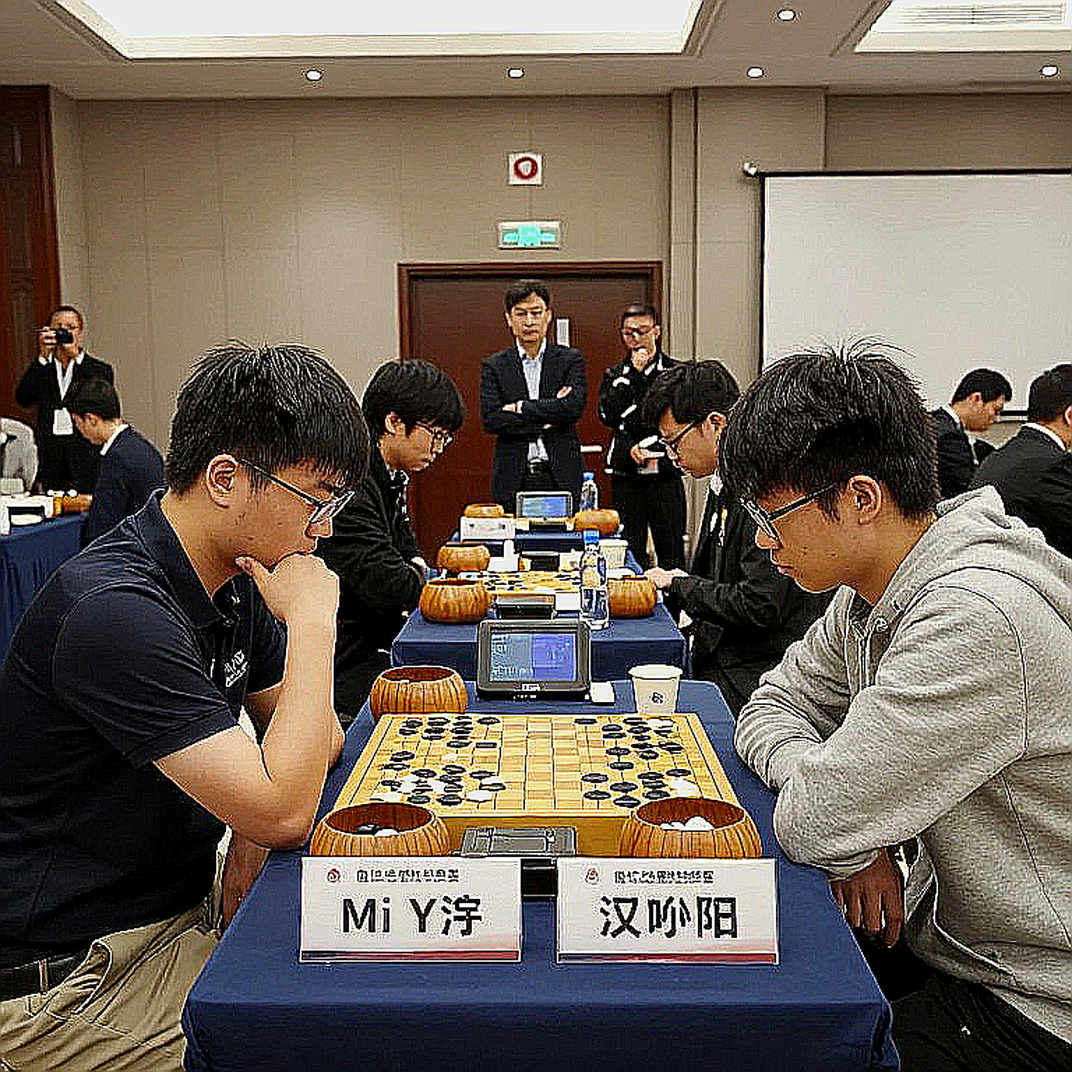
The upcoming match has two names and two flags. D Gukesh of India, reigning world champion, enters as the defender of the throne. Javokhir Sindarov of Uzbekistan enters as the challenger. This is one of the rare occasions when a world chess final features no European representative, no North American representative, no trace of the post-Soviet school in the familiar sense. Two rising Asian chess nations sit on either side of the same wooden board, and both men seated there belong to the generation born after the year 2026.
I have followed the national rankings of both countries for more than a decade, and what caught my attention was not the rise of one individual but the thickness of the next layer. India produced not one but a whole cohort of young talents within a single cycle. Uzbekistan did the same on a smaller scale but with notable density. This title match is the inevitable result of two parallel currents, not a single burst of brilliance.
Between them stands a figure absent from the board yet present in every question: Magnus Carlsen. The former world champion who declined to defend his title after 2026 and left behind a power vacuum unprecedented in this sport. When a man steps off the throne but keeps his voice, every statement he makes becomes a kind of soft standard. When Carlsen says someone is the favourite, betting markets shift, outlets republish, fans argue. One sentence from him carries the weight of an official bulletin, even though it is merely a personal opinion.
What is notable is that the factual analysis I have on hand provides not a single quantitative detail about either player's Elo rating, no head-to-head record, no detailed schedule, no prize fund. All we have is a string of qualitative statements. That gap is precisely the starting point for understanding the real story behind this title match.
The backdrop has two layers. The first is format. Modern world championship matches are typically staged over a series of classical games, then move into a rapid tiebreak, then blitz, and finally an Armageddon game if the score remains level. This process is designed so that there is never a drawn outcome, but it is also the target of criticism from leading players for years. Carlsen publicly called the format an extraordinarily bad way to determine who the best player is. He has held that position across multiple cycles, and it has not softened.
The second layer is psychological. At the elite level of modern chess, the technical gap between two top players is often smaller than the margin of error in a single training session. When skill levels are close, what decides the outcome is the ability to hold up under pressure in the fifth and sixth hour of a game, to sit back down after a loss, to resist convincing yourself that a position is already safe. That is why statements like 'this one is the favourite' carry real weight even when they are not built from data.
With that in mind, I went back through my notes on both players, and I want to lay them out systematically.
Gukesh is the most unusual case I have ever commentated on in more than thirty years in this profession. He won the world title in Singapore, beating Ding Liren 7.5-6.5 in a match that went to the final game. He was eighteen years old, the youngest in history, breaking the record Garry Kasparov set in 2026 at twenty-two. The factual analysis states this clearly: Gukesh is the youngest world champion in history. That is the only quantitative fact in the entire document I have.
But one fact does not make an argument. Winning at eighteen proves he has technique and nerve. It does not prove he enters his first title defence in the form that made him champion. Carlsen in fact stresses exactly this point: Gukesh needs to recover the form that put him on the throne. That is a sharp piece of commentary, because it acknowledges past achievement while questioning the present state.
Sindarov has a different career structure. He is a product of a golden Uzbek generation, the cohort that lifted the country to the top of the Chess Olympiad in Chennai in 2026, when Uzbekistan won team gold in the open section. That is a verifiable milestone, and it explains why a young Uzbek player can reach a world title match without being treated as an accident. He does not come from nowhere.
The analysis describes Sindarov as a well-rounded player with no obvious weakness in his technical structure. In chess, 'well-rounded' is a dangerous compliment, because it usually implies that no single weapon is sharp enough to win consecutive games. People win title matches with something specific: an unpleasant opening system, superior endgame technique, or the ability to calculate beyond a threshold under short time.
So what is the real technical question of this match? I believe it sits in three layers.
The first is the opening. In contemporary elite chess, opening preparation accounts for up to seventy percent of pre-match workload. A player and his team of seconds build thousands of lines, memorise to move twenty-five, and what they are looking for is not an advantage but a position that cannot be neutralised. Carlsen speaks of Gukesh's need to gain early advantage. In modern chess, early advantage almost always comes from a crack in the opponent's preparation file rather than a random blunder on the board.
The second is endgame technique. This is where title matches have been decided over the past two decades. Gukesh's match against Ding Liren in 2026 was settled by an endgame error in the final game. Carlsen's match against Karjakin in 2026 was settled in a rapid tiebreak after the classical series ended level. Those outcomes say one thing: at this level, nobody wins by playing better across the whole match. People win by not collapsing at the exact moment their opponent collapses.
The third is the psychology of leading, and this is the axis of Carlsen's assessment. He said that if Gukesh gains confidence and takes an early lead, Sindarov may begin to doubt himself. In the reverse direction, if Sindarov takes the early edge, Gukesh falls into a heavy psychological state of having to chase. In a fourteen-game match spanning more than two weeks, leading by one game early is not merely a scoreline. It is control of tempo. The leader is allowed to play for draws. The trailer must play to win, and every game that must be won is another push of risk higher up the ladder.
This is the point media usually skips. They count wins and call it form. But in chess, what is counted most precisely is the number of decisions. Every game at 2700 level contains moments when a safe move and the strongest move differ by a quarter of a pawn. Nobody sees that difference on a scoreboard. Only the person at the board sees it, and they see it forty times a game.
Based on my experience covering long classical matches, I can say that most world championship matches are decided somewhere between game eight and game twelve. That is the zone where physical fatigue starts eroding concentration, where players have exhausted most of their preparation files and must play on instinct. Whoever has the stronger endgame foundation crosses that zone more safely, and the one who crosses safely is usually the one who takes the decisive game.
One detail in the document caught my eye: the analysis notes that Gukesh most likely holds the world title and Sindarov is the challenger. That sounds obvious, but it carries structural meaning. The defending side faces a different kind of pressure from the challenger. The challenger enters with nothing to lose. The champion enters with everything to lose. That asymmetry does not appear in any rating table, but it appears in every title match I have watched.
History gives us some reference patterns. Kasparov defended against Karpov several times in contests so evenly matched that each stretched over months. Carlsen defended against Karjakin in a tiebreak, then against Caruana in a memorable run of draws, then against Nepomniachtchi with a late burst of wins when his opponent lost psychological control. The common denominator: the defending champion won not by playing more beautifully, but by enduring better.
This brings me to a contrarian reading that I consider the most important in the whole story.
Carlsen calling Sindarov the clear favourite can be read two ways, and neither has anything to do with Elo. The first is literal: he genuinely rates Sindarov higher at this moment. The second is structural-psychological: placing the favourite label on a young player who has never defended a major title is a way of loading weight onto shoulders that never asked for it. That label does not help Sindarov calculate better. It only makes every draw look like weakness and every mistake look like evidence for a forecast.
In the other direction, calling Gukesh the underdog is a gift. It frees him from expectation. The youngest world champion in history enters his first title defence as the lesser-rated side, and if he wins, nobody can say he won because he was rated higher. What is called expert opinion sometimes operates as a disguised psychological tactic, and in a sport where sitting still for four hours is part of the rules, psychological tactics carry real weight.
But I do not want to stretch so far as to read conspiracy into every remark. There is a third reading, and it is more modest: an old champion observing the next generation through the eyes of someone who has walked that road, with what he says reflecting professional instinct rather than a scheme. Carlsen's professional instinct is broadly reliable, but it remains instinct. It cannot replace data. And the greatest weakness of the debate around this match is exactly there: we are building expectations on one man's authority, while the board will be decided by the moves of two other men.
A further note on Carlsen's repeated criticism of the format. He has called it a poor way to determine the strongest player. That claim has its own basis. A fourteen-game match can be decided by a rapid tiebreak, meaning a fundamentally different skill set from classical chess. The strongest classical player is not necessarily the strongest rapid player after fourteen games have worn both sides down. The result is a system that may hand the title to the player better suited to the format rather than the stronger chess player. That is a real governance issue, and it will still be discussed after the match ends.
Among all of this there is a professional lesson I carry from the summer of 2026, when I travelled to Russia with confidence accumulated from a successful year on digital platforms. I mispronounced a competitor's name three times in one half, then fell silent for twelve seconds on air out of shame. That night I withdrew alone and reviewed footage for a month. After July 2026, I understood that humility is also a tactic. Since then I set a ritual: two hours of research for every ninety minutes of competition. For chess I double that figure, because a game lasts four hours and every move can be recorded and checked.
That ritual taught me that much of what we call 'form' in elite sport is really the quality of preparation revealed under pressure. It also taught me that what we cannot measure is often more important than what we can. In this title match we have no Elo figures at hand, no head-to-head record, no prize fund, no detailed schedule. We have a qualitative assessment of two young players and a format critique that has run for years. That is a thin foundation for a forecast, but a thick enough one to understand what is actually happening.
What is actually happening is a shift in the centre of gravity of world chess. That centre once sat in Moscow, then drifted west with Karpov, Kasparov and Carlsen. Now it is drifting southeast, toward India and Uzbekistan. This title match is a marker of that shift. And what is fascinating is that neither country built its position on a single prodigy. They built it with a youth development system thick enough to produce a steady line of international grandmaster-standard players at ages when most other countries are still running junior tournaments.
For India, the verifiable milestone is the performance at the Chennai Olympiad in 2026, where Gukesh played board one for India 2 and delivered a performance rating at a superhuman level, an indicator of actual strength far above his official rating. For Uzbekistan, the milestone is the team gold at that same Olympiad. Placed side by side, those two facts explain why this title match has no traditional representative. Not because old chess nations weakened, but because two new ones thickened faster than expected.
Seen from that angle, the real question of the match is not who is the favourite. The real question is whether an eighteen-year-old champion can defend his title the first time he carries that burden, and whether a player from a strong team system can convert collective strength into individual strength across a match of seven hours a day. Both are questions without clear precedent.
I have commentated many matches in empty halls during the pandemic. Three hundred and twelve days without a single spectator. Forty-five matches without a single round of applause. When the stands are empty, I hear the game whisper in a different language — breathing, pieces touching the board, the digital clock ticking in silence. I learned that the loudest things were never the things that decided outcomes. Applause has never moved a single chess piece.
The title match between Gukesh and Sindarov will have spectators, will have media, will have headlines calling one the favourite and the other the underdog. But when the clock is pressed, only two people and sixty-four squares remain in that room. Every label disappears on the first move. Every forecast becomes background noise. What remains is the question chess always asks, in every generation: which of these two can sit still longer, calculate further, and endure better in the moment when nobody is on their side.
Sindarov may be the favourite. Gukesh may be the youngest champion in history with a ceiling nobody has touched. But a fourteen-game match is not a test of talent. It is a test of constancy. And in a sport where the margin of error is measured in a quarter of a pawn, constancy is the only thing that cannot be prepared in advance by a computer file.

Cầu thủ liên quan
Bài nổi bật
The Bayonet Attack and the 9...a5 Antidote: Inside a King's Indian Opening Product With a Mismatched Headline2026-09-18
The Bayonet Attack, 9...a5 and the Data Gap of a Chess Antidote2026-09-18
ChessBase Magazine #225: 27 Miniatures, 10 Opening Articles and the Honest Voice of Prague2026-09-18
ChessBase's FRITZ 20: A Training Revolution Without a Measuring Stick2026-09-13
Gukesh vs Sindarov: The Psychological Battle Under Carlsen's Prophecy2026-09-11
Bài đề xuất
Notice on Data Integrity in Chess Analysis2026-09-09
Chess Olympiad 2026: The Torch Reaches Samarkand and Three Claims That Need Verifying2026-09-15
The Bayonet Attack and the 9...a5 Antidote: Inside a King's Indian Opening Product With a Mismatched Headline2026-09-18
Detailed Chess Game Analysis: Unable to Assess Due to Insufficient Information2026-09-09
The Chess Transfer Market: When Elo Stops Being the Currency2026-09-16
Bài đề xuất
ChessBase Magazine #225: 27 Miniatures, 10 Opening Articles and the Honest Voice of Prague2026-09-18
The 'Taimanov Sicilian' Chess Course: A Title Pointing at the Wrong Board2026-09-13
World Cup 2026: An Empty Analysis File and the Lesson of Source Data2026-09-10
Andrew Martin's 60-Minute Elephant Gambit: They Sell the Surprise, You Pay With a Pawn2026-09-14
Carlsen Calls Sindarov the Clear Favourite Against Gukesh: A World Chess Championship Shaped by Authority, Not Data2026-09-11
Bài đề xuất
Carlsen Says 'I'm a Fan': Praggnanandhaa's Journey from Unknown Prodigy to Generational Icon2026-09-11
ChessBase's FRITZ 20: A Training Revolution Without a Measuring Stick2026-09-13
Gukesh vs Sindarov: The Psychological Battle Under Carlsen's Prophecy2026-09-11
World Cup 2026: An Empty Analysis File and the Lesson of Source Data2026-09-10
Carlsen Draws Sindarov at Global Chess League 2026: The 3.f6 Move Born From a Coach's Misclick, and an Unresolved Clock Problem2026-09-10